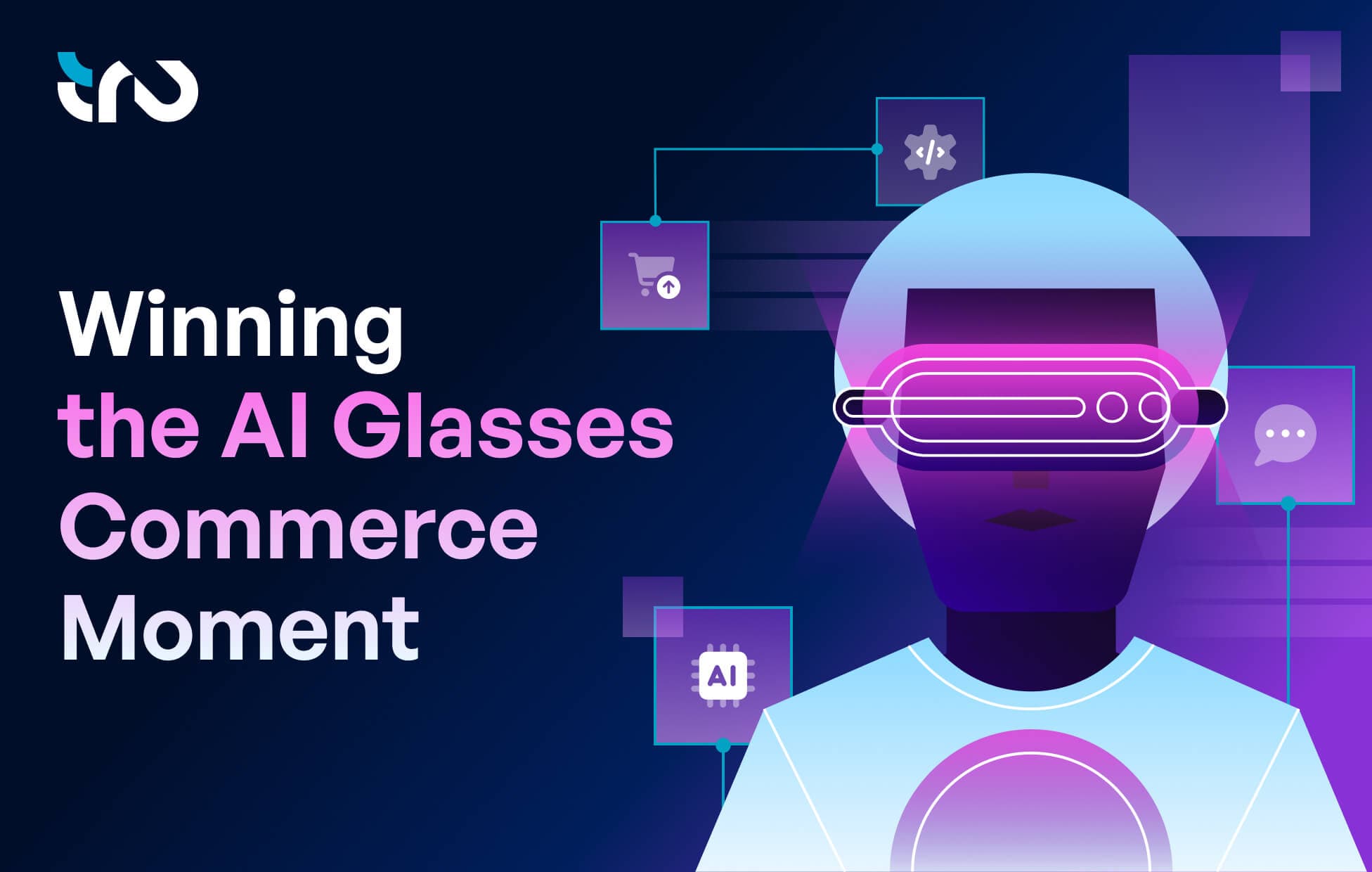
Shopping is stepping out of screens and into everyday moments. A product gets identified while walking past a shelf. A question gets answered mid-conversation. A purchase happens without opening a browser. AI glasses introduce a new commerce surface where attention is brief, intent is immediate, and decisions happen in real time. Brands are not losing relevance here. The rules of visibility and influence are being set in entirely new ways.
The Numbers That Should Make You Pay Attention
Real usage is already ahead of perception. The numbers show a category scaling fast and influencing how products get discovered and bought.
Meta continues to lead the category, shipping over 7 million AI smart glasses in 2025, with sales more than tripling year-over-year through its partnership with EssilorLuxottica (UploadVR).
~7M+ units shipped in 2025, with strong year-over-year growth (UploadVR)
Meta holding over 80% market share across global shipments (Cyprus Mail)
AI smart glasses revenue forecast to quadruple in 2026 (BusinessWire)
AI smart glasses market value is expected to reach US$5.6 billion (BusinessWire)
Adoption is accelerating, and more importantly, behavior is already evolving alongside it.
Three Changes Retailers Should Be Naming Out Loud
Three changes are reshaping how people discover, evaluate, and purchase products:
The Browser Becomes a Glance
A product page no longer gets minutes of attention. A price, a rating, and a short review summary appear for a few seconds, and that is enough to move forward or move on.
What actually earns attention at a glance:
Product details that can be understood instantly
Review highlights that answer real questions
Clear, structured information that can be pulled into short summaries
How this shows up in AI glasses: Meta’s Ray-Ban Display is designed for short, glance-based interactions on an on-lens display (Meta Blog 2025).
A long, visually rich page still exists. The first interaction now happens in a fraction of that space.
The Search Box Becomes a Voice
Questions are spoken, not typed. A single answer is returned instead of a list of links. That answer decides which brand enters consideration.
What gets picked in a voice answer:
Structured product data that is easy to interpret
Accurate attributes across every listing
Consistent naming, categorization, and descriptions
How this shows up in AI glasses: Meta’s Muse Spark allows users to ask questions through voice and receive AI-generated answers that guide what gets discovered and considered (Meta Newsroom).
Agents pick the result. Presence depends on how well a product can be understood, not how well it is ranked.
The Checkout Becomes a Gesture
Discovery and purchase sit much closer together. A product can move from interest to confirmation in one continuous flow.
What happens between interest and purchase:
Checkout happens inside platforms users already trust
Fewer steps between intent and action
Less reliance on traditional navigation paths
How this shows up in commerce: Meta is integrating AI-driven shopping into Instagram and Facebook, allowing users to move from discovery to purchase within the same interface (TechCrunch).
Speed increases, but so does the importance of readiness behind the scenes.
Explore Tru’s Agentic Commerce Solutions for AI-driven product selection and transactions.
What the Glasses Actually Do Today
The current experience is grounded and already useful. A voice-first assistant sits on the user’s head, ready to respond in real time.
What these glasses can already do:
Voice interaction for questions, comparisons, and quick decisions
Visual recognition to identify products in front of the user
On-lens display showing concise product details
Gesture-based input through simple hand movements
A fully immersive visual layer is still in development, yet the present experience already supports everyday shopping decisions without requiring a phone in hand.
Your Website’s Role in AI Glasses Commerce
The homepage no longer matters most. Product detail, product data, and post-click experience do.
Awareness: From SEO to AI Answers
Search results don’t introduce brands the same way anymore. Products get discovered when they appear inside direct answers, not when they rank on a page.
Earn discoverability inside AI answers. Make your product data readable, structured, and selectable with Tru’s AI Search Optimization Services.
Discovery: Visual and Voice, Not Browsing
Shoppers look at products and ask questions instead of navigating pages. What shows up depends on images, structure, and how clearly the product can be identified.
Consideration: Glanceable Product Detail Pages
Only a small part of the product page gets seen. A short summary, price, and rating now carry the decision instead of a full-page exploration.
Purchase: Checkout Happens Outside Your Website
Transactions can complete without visiting your site. Platforms handle the purchase while your backend supports inventory and fulfillment.
Retention: Owned Identity Still Matters
Customer relationships depend on access you control. Without email, apps, or loyalty programs, repeat engagement becomes difficult.
Service: Voice-First Customer Support
Support queries happen through spoken interaction. Answers need to be clear and direct when heard, not designed for long reading.
What Brands Should Do in the Next 90 Days
Preparation starts with how products are structured, described, and made available for purchase, through these priority actions:
Audit every product page for structured, agent-readable data: Ensure all attributes are complete and consistent so products can be correctly interpreted and selected.
Rewrite product summaries and reviews as quotable lines: Focus on short, clear statements that answer key questions instantly.
Get onto platform commerce surfaces: Keep product catalogs active across platforms where discovery and purchase already happen.
Prepare for agent-led checkout flows: Align systems to support direct, platform-driven transactions.
Build a clear voice style for product content: Ensure descriptions are easy to understand when spoken or summarized.
Pilot in-store assisted selling use cases: Enable faster product lookup and real-time support for store associates.
Execution across these areas determines how well a brand appears and performs in new interfaces, and whether it gets selected or skipped.
The Bottom Line
Smart glasses will not replace phones overnight. Screens still play a central role in daily interactions. A new pattern is already visible where quick decisions happen without opening a browser.
Brands that maintain strong product data, clear content, and reliable commerce systems will be easier to surface, easier to understand, and easier to purchase.
The interface may change. The foundation remains the same.
Transform Your Commerce Stack with Tru
Connect with Our AI ExpertsFrequently Asked Questions About AI Glasses Commerce
AI glasses commerce refers to shopping experiences powered through smart glasses, where users can discover, compare, and purchase products using voice, vision, and real-time AI assistance instead of traditional browsing.
AI glasses replace browsing and search with AI-generated answers that identify, compare, and recommend products in real time.
Websites still matter, but mainly as a source of product data, content, and fulfillment. Discovery and purchase increasingly happen through AI systems and platforms.
Brands should focus on structured product data, clear and concise content, platform integrations, and systems that support AI-led discovery and transactions.